

19. 6. 2025 - Josef Brynda
Yesterday’s meeting of the Federal Reserve (Fed) brought the expected decision to keep the benchmark interest rate in the range of 4.25–4.50%. This marked the fourth consecutive meeting at which the Fed left rates unchanged. During the press conference, Chair Jerome Powell confirmed that the U.S. economy remains in “solid condition” and the labor market continues to be strong, even though unemployment has slightly risen to 4.2%. He also emphasized that the strength of the labor market is reflected in historically low unemployment levels — a goal the U.S. had long been striving for. However, the Fed remains cautious, particularly due to renewed inflationary pressures arising from geopolitical risks (such as tensions in the Middle East) and newly introduced tariffs.
In its updated economic projections (the so-called dot plot and Summary of Economic Projections), the Fed expects a median of two rate cuts by the end of 2025, totaling 50 basis points. However, an increasing number of FOMC members no longer anticipate any cuts. While only four members forecast no rate cuts at the previous meeting, that number has now risen to seven. Currently, eight members project two cuts by the end of the year. The projections also reflect a lower expected GDP growth (now 1.4% compared to 1.7% in March) and a slightly higher inflation rate (3%). Unemployment is projected to rise further to around 4.5%.
This combination of weaker growth and higher inflation raises concerns about the potential onset of so-called "stagflation lite" — a scenario in which economic growth stalls but inflation persists. Notably, the Fed removed this term from its latest statement, even though it had been included previously. The Fed now faces a delicate balancing act: easing policy to support economic growth while maintaining a sufficiently restrictive stance to prevent a resurgence of inflationary spirals.
One striking moment came from former President Donald Trump, who publicly called on the Fed to implement aggressive rate cuts and referred to Powell as a “fool.” Nonetheless, the Fed remains committed to its independence and stresses that its decisions are guided primarily by current economic data. From an economic analyst’s perspective, the former president’s statement appears misguided and fails to reflect the actual economic context.
Financial markets reacted rather mildly. Stock indices weakened slightly, and the yield on two-year U.S. Treasury bonds fell below the 4% threshold. Both consumers and businesses should prepare for a prolonged period of elevated interest rates. Long-term loan products such as mortgages and business loans will likely remain costly through 2026 or even 2027. Some raised concerns about the affordability of mortgages and whether Powell sees this as a reason for lowering rates. However, as discussed in several of my previous articles, it’s clear that the primary goal of the Fed — and central banks in general — is price stability. Powell defended this stance, stating (paraphrased) that maintaining price stability would ultimately benefit the public far more than low interest rates amid persistent inflation.
In summary, the Fed is currently in wait-and-see mode, assessing the situation carefully. Inflation remains a concern, economic growth is slowing, and the outlook is uncertain. While the scenario of “two rate cuts by year-end” remains on the table, it is far from guaranteed. For investors, businesses, and households, this likely means an ongoing environment of elevated costs and market volatility extending into next year. Powell’s comments during yesterday’s speech had a clearly hawkish tone — a stance that typically strengthens the domestic currency and slows or corrects equity market growth. However, today's economic environment is more sentiment-driven, and even that, Powell noted, appears to be improving.
18. 6. 2025 - Josef Brynda
Today's Federal Reserve (Fed) meeting is one of the most closely watched events of the month, primarily due to the uncertainty surrounding the future path of interest rates. Markets and analysts overwhelmingly expect the Fed to keep rates unchanged in the current range of 4.25–4.50%, with a probability of 99%. The reason lies in the Fed's continued caution towards inflation and its effort to assess the impact of previous monetary tightening on the economy. Given the recently released data showing a slightly weakening labor market but a mild acceleration in May inflation, attention is shifting towards the updated forecast and the speech by Fed Chair Jerome Powell. Powell has consistently emphasized two core objectives in his previous statements: the labor market and inflation. Since the labor market has softened only slightly, but inflation has shown signs of picking up, a cautious tone is expected regarding future rate cuts by the Fed.
Much anticipation surrounds the so-called "dot plot" – a chart that reflects individual FOMC members' projections for future rate levels. While the Fed anticipated two possible rate cuts in 2025 back in March, current expectations are more restrained – a single rate cut is likely, either in September or December. The Fed continues to adopt a data-driven approach and is waiting for clearer evidence that inflation is sustainably declining toward its 2% target.
A key focus of the evening press conference will be Powell’s tone. If his rhetoric is markedly cautious or overtly hawkish, it may indicate that the Fed is prepared to keep rates higher for longer than markets would prefer. This stance could strengthen the U.S. dollar and trigger corrections in equity markets. Conversely, any hint of readiness to ease monetary policy sooner could lead to a rally in stock indices and a weaker dollar.
Broader geopolitical and trade conditions also play a crucial role – particularly the uncertainty surrounding tariffs on Chinese goods, oil price developments, and tensions in the Middle East. These factors increase the risk of renewed inflationary pressures, which the Fed is likely to reflect in its outlook. The meeting will therefore have not only an immediate impact on financial markets but also broader implications for the direction of monetary policy in the second half of 2025.
Overall, we expect Powell to conduct the press conference in line with previous ones – in a “no rush” tone, suggesting that rates are appropriately set. In fact, it is not unreasonable to consider one of the more extreme scenarios: that the Fed may keep rates unchanged for the remainder of the year. Inflationary pressures, though perhaps not overt, are certainly still simmering under the surface – whether through the threat of tariff-driven inflation or a potential oil shock.

17. 6. 2025 - Josef Brynda
Current developments in foreign exchange markets are strongly influenced by the escalating tensions in the Middle East, particularly between Israel and Iran. While geopolitical risks are providing short-term support for the US dollar, market reactions have remained relatively muted. The main transmission channel for geopolitical events continues to be oil. So far, investors do not anticipate a major disruption in supply, which has led to a slight correction in oil prices and consequently less pressure to strengthen the dollar.
A potentially stronger driver for the dollar may come from the G7 summit taking place in Canada, where trade policy is expected to take center stage. Past experience suggests that direct talks between Donald Trump and other leaders have occasionally resulted in a softer stance on protectionism. If the 90-day tariff truce is extended, this would likely provide further support to the dollar.
Today’s ZEW index data from the eurozone showed a slight improvement in expectations regarding the future economic outlook. However, the current assessment of the economic situation remains deeply negative – the “current situation” indicator stands at -72 points. Given the calculation method (for example, if 50% of respondents expect an improvement and 20% expect a deterioration, the index reads +30), a value of -72 suggests that negative assessments strongly dominate – roughly estimated, this could indicate around 10% positive vs. 82% negative responses.
On the other hand, the component of the index reflecting expectations for the next six months indicated a degree of optimism. It is important to note, however, that this indicator tends to be volatile and is highly sensitive to current geopolitical and economic developments.
For currency markets – particularly pairs involving the US dollar – three key factors are expected to drive movements this week. First, the ongoing situation in the Middle East, which directly affects global risk sentiment. Second, today’s US retail sales data, which will provide insight into the strength of consumer demand. And third, Wednesday’s meeting of the US Federal Reserve, where investors will closely watch not only the rate decision but especially the updated economic projections (dot plot) and commentary on inflation developments. The Fed’s stance is likely to be the main market mover in the second half of the week.
9. 6. 2025 - Josef Brynda
Last week was rich in macroeconomic data and marked by heightened volatility across markets. Early in the week, U.S. labor market data delivered a surprise – the JOLTS report showed that job openings rose by 191,000 to 7.391 million in April, exceeding market expectations. However, layoffs also surged by 196,000 to 1.786 million, signaling a mixed employment outlook. On Wednesday, the ADP report disappointed, with the private sector adding only +37,000 jobs, well below the expected +110,000. This drop raised concerns about a slowdown in labor market momentum.
The key event came on Friday with the Non-Farm Payrolls report, which positively surprised the markets. The U.S. economy added +139,000 jobs outside the agricultural sector, beating the consensus estimate by about 10,000. The unemployment rate remained steady at 4.2%. Markets reacted positively, and despite the weak ADP data, confidence in the labor market returned. The dollar strengthened, as the combination of solid job growth and persistently high inflation gave the Fed room to maintain its cautious hawkish stance.
Another important factor last week was the European Central Bank's policy decision. The ECB cut rates for the eighth consecutive time, this time to 2%. However, ECB President Christine Lagarde suggested a potential pause in further easing, expressing confidence that the ECB was nearing its inflation target. This rhetoric supported the euro – EUR/USD approached 1.15, reflecting investor response to the prospect of monetary policy stabilization in the eurozone. However, the strong U.S. data on Friday trimmed these gains, and the dollar ended the week on a stronger note. It will now be interesting to monitor inflation trends in both Europe and the U.S. With eurozone inflation falling below 2%, further disinflation may persuade the ECB to continue easing – though this remains uncertain.
Today, Monday, June 9, markets are closely watching high-level trade talks between the U.S. and China, taking place in London. The U.S. is represented by Treasury Secretary Scott Bessent, Commerce Secretary Howard Lutnick, and Trade Representative Jamieson Greer, while China is represented by Vice Premier He Lifeng. The talks focus on tariffs, technology exports, and critical raw materials. While a breakthrough deal is unlikely, partial agreements or extensions of the current tariff pause would likely calm the markets. In anticipation of the outcomes, the dollar slightly weakened during the morning session.
Negative macro data also emerged from China – May’s PPI (Producer Price Index) declined by 3.3% year-on-year, while consumer CPI dropped by 0.1%. These figures confirm deflationary pressures in the Chinese economy and suggest that Beijing will likely continue with an accommodative monetary policy, which also affects global commodity and currency markets.
Markets are now turning their attention to Wednesday’s U.S. CPI data. A 0.2 percentage point year-over-year increase is expected, and if confirmed, it will support the Fed’s current restrictive policy stance. Markets currently assign only a 53% probability to a rate cut in September – highlighting continued uncertainty. So far, our long-term outlook remains valid: the Fed is likely to remain hawkish throughout the year. Combined with a surprisingly strong labor market and persistently above-target inflation, the dollar’s position could strengthen – especially if today’s U.S.-China talks help ease geopolitical tensions and stabilize expectations regarding the U.S. economic outlook. This week could therefore be pivotal for the dollar and overall market sentiment.
It is also worth noting that the euro has recently shown strength against the dollar, mainly due to uncertainties in the U.S. surrounding trade tensions and a possible stabilization of eurozone interest rates. Today’s markets are extremely difficult to forecast, as evidenced by the wide range of conflicting analyses regarding currency developments. Fundamentally, the U.S. economy does not yet appear to be facing serious issues – although there are some early signs of concern. However, soft data and sentiment indicators often suggest a more cautious view.
19. 5. 2025 - Josef Brynda
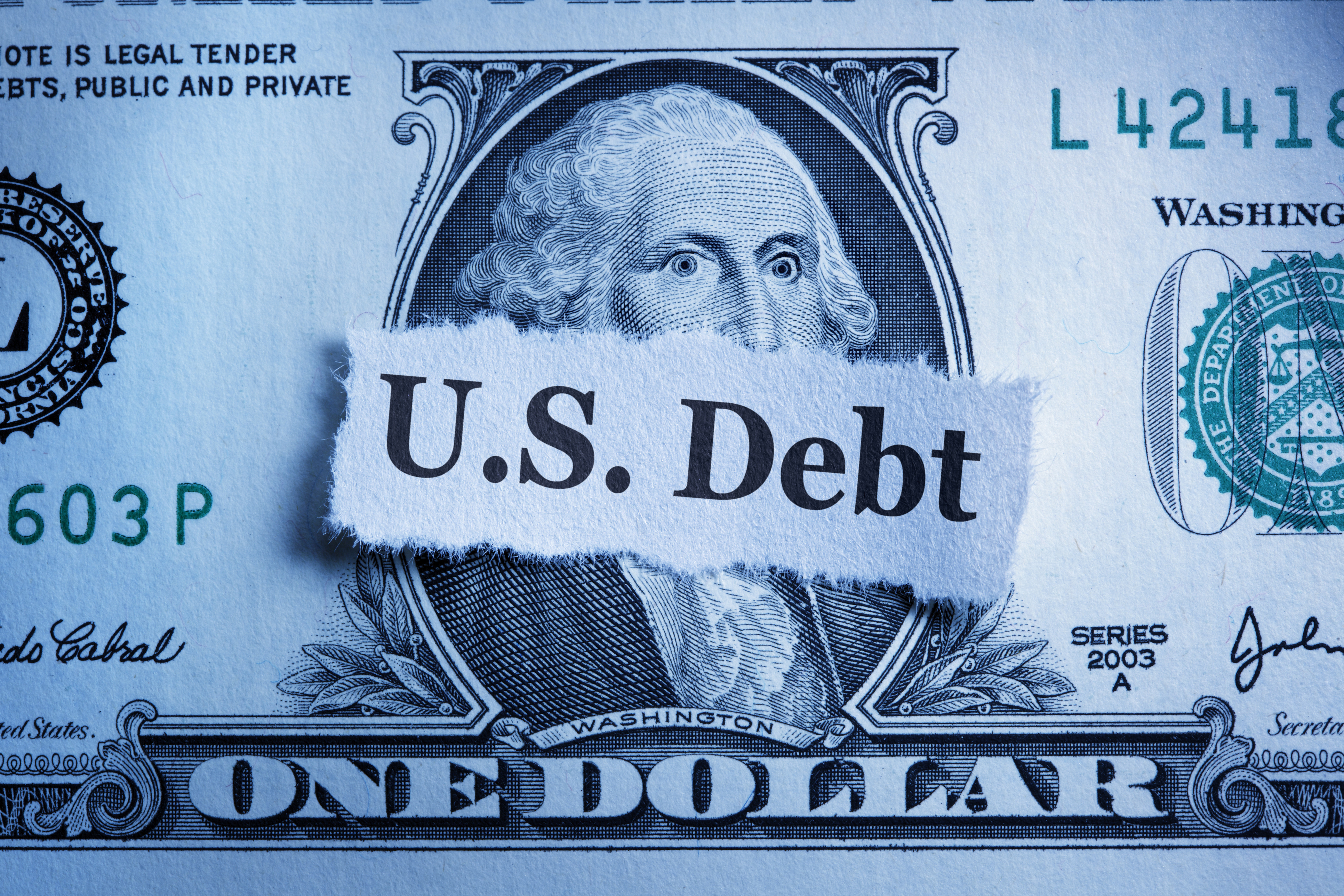
On Friday, May 16, 2025, Moody’s Investors Service downgraded the United States’ credit rating from the highest level Aaa to Aa1. For the first time in over a century, the U.S. has lost its last remaining top-tier credit rating from the major rating agencies. The downgrade is attributed to persistent high fiscal deficits, rising debt servicing costs, and the inability of political leaders to implement effective measures to stabilize public finances.
According to Moody’s, U.S. federal debt has reached $36 trillion and could grow to 134% of GDP by 2035. The agency also warns that interest payments could consume up to 30% of federal revenues by then. Moody’s criticized both current and past administrations for their lack of fiscal discipline and political unwillingness to address the structural imbalance between revenues and expenditures.
Markets reacted negatively to the announcement. Futures on U.S. stock indices fell—S&P 500 by 1.2%, Dow Jones by 0.8%, and Nasdaq by 1.22%. Yields on 10-year Treasury bonds rose to 4.54%, and 30-year yields exceeded 5%, all during the Asian trading session. The U.S. dollar weakened against major global currencies, while gold prices increased by 0.8% to $3,213 per ounce. European and Asian equity markets also recorded losses.
The Treasury Department, led by Scott Bessent, called the Moody’s move a “delayed indicator” that merely confirms existing issues. It blamed the previous Biden administration for excessive government spending. In contrast, Democrats criticized the proposed “One Big Beautiful Bill”, which would extend the 2017 tax cuts and, according to estimates, increase the deficit by more than $3 trillion over the next decade.
The downgrade increases the perceived risk of U.S. Treasury bonds, meaning investors will demand higher yields as a risk premium. This could make borrowing more expensive not only for the federal government but also for the private sector, including mortgages, consumer loans, and corporate bonds. The result may be a broad tightening of financial conditions across the economy.
During the European session, the U.S. dollar weakened against major currencies, falling by more than 1% against the euro. Investors are increasingly considering a shift to alternative safe-haven assets, such as the Swiss franc or gold, which undermines the dollar’s status as the world’s primary safe haven. This trend may continue if concerns over the U.S.'s debt sustainability persist.
On the other hand, rising U.S. bond yields increase the real interest rate differential relative to other currencies, which could support the dollar. The result may be a mixed and volatile outlook, heavily influenced by market expectations surrounding future Fed actions and U.S. fiscal policy. According to Fed officials and underlying economic data, the economy is not currently operating below its potential—the labor market remains strong, GDP growth is projected to rebound in Q2, inflation is relatively contained, and interest rates remain elevated.
The downgrade comes at a time of growing fiscal uncertainty and rising debt service costs. In the long term, this could lead to permanently higher borrowing costs for both the government and private sector and erode investor confidence in U.S. assets. Nevertheless, U.S. Treasuries remain a key safe-haven asset in times of global turmoil, which may mitigate the impact of the rating downgrade.
However, for the Treasury market to stabilize, fiscal measures from the Trump administration will likely be necessary, and are expected to arrive sooner or later. A critical factor going forward will be how fiscal policy addresses the debt brake and whether it manages to restore market confidence in U.S. public finances.

14. 5. 2025 - Josef Brynda
The Direction of the U.S. Dollar Following the Latest CPI Data Release
Yesterday's inflation data from the United States surprised the markets. The year-over-year Consumer Price Index (CPI) came in lower than analysts had expected, both in headline and core components. Consumer prices rose at a slower pace, temporarily easing market concerns about persistent inflationary pressures. This development had an immediate impact on the EUR/USD exchange rate, which returned to levels reminiscent of the temporary 90-day trade truce between the U.S. and China. This market reaction was, to some extent, anticipated following the data release.
However, the question remains: is this the beginning of a longer-term weakening of the dollar, or merely a short-term fluctuation?
Based on the comments of Federal Reserve Chair Jerome Powell and the overall tone of the latest FOMC meeting, it can be expected that the dollar may strengthen again in the longer term. Powell emphasized the ongoing robustness of the labor market and overall economic performance. He did not signal a shift toward aggressive rate cuts—only up to two rate reductions are expected by the end of the year. This continues to create a positive interest rate differential compared to most other currencies and supports demand for the U.S. dollar.
Another key factor is the development of Gross Domestic Product (GDP). In the first quarter, the U.S. economy experienced an unexpected contraction. However, this was largely due to a one-off surge in imports, as American companies stockpiled goods in anticipation of potential new tariffs. Since GDP is calculated as the sum of consumption, government spending, investment, and net exports (NX = exports – imports), the sharp increase in imports led to a decline in net exports, thereby dragging down GDP growth. This effect is expected to be temporary.
Analysts therefore anticipate a return to GDP growth in the second quarter, which should once again reinforce confidence in the strength of the U.S. economy—and, by extension, the dollar. Unemployment remains low, which is another indicator of economic resilience. Given the direct link between GDP growth and the labor market, there are grounds to expect continued economic expansion.
Despite the recent easing of inflationary pressures, the Fed’s stance remains cautiously restrictive. If inflation stays elevated or starts to rise again, a prolonged period of stable interest rates cannot be ruled out—which would help prevent further dollar weakening.
In addition to macroeconomic fundamentals, improving market sentiment also plays a role. Donald Trump’s ongoing negotiations with key trade partners and the generally positive performance of financial markets (with equity indices posting gains since the start of the year) support optimism about future growth. This sentiment often spills over into the strength of the national currency.
Conclusion:
The recent weakening of the U.S. dollar following the lower CPI data appears to be a short-term market reaction. From a longer-term perspective, the U.S. economy remains fundamentally strong, the labor market is stable, and the Fed continues to adopt a cautious approach. The expected rebound in GDP in the second quarter, combined with relatively high interest rates compared to other countries, should continue to provide support for the U.S. dollar throughout the remainder of the year.

12. 5. 2025 - Josef Brynda
Today, May 12, 2025, the United States and China announced a significant agreement to reduce tariffs for a 90-day period, marking a major step toward easing tensions in the ongoing trade conflict.
Key Points of the Agreement:
Market Reaction:
Background:
Outlook:
While seen as a positive step, analysts caution that this is only a temporary measure. Structural imbalances and deeper strategic issues remain unresolved. The next three months will be critical in determining the future of U.S.-China trade relations.

24. 4. 2025 - Josef Brynda
During his time in politics, Donald Trump repeatedly expressed, and the media frequently highlighted, his intent to lower the value of the U.S. dollar. His logic was straightforward: a weaker dollar improves the export competitiveness of the United States and simultaneously reduces the real cost of repaying U.S. government debt denominated in dollars. At first glance, it may seem that he has succeeded, indeed, the dollar weakened during certain periods.
However, the situation is far more complex. In June of this year, the United States faces a significant government bond repayment, where the effects of a weaker dollar were theoretically expected to be most apparent. Yet one crucial factor that Trump either overlooked or failed to influence in the long term is the yield on U.S. Treasury bonds.
While the early stages of his leadership saw a decrease in Treasury yields, the second half of his current term has been marked by a sharp rise in those yields. This increase has significantly raised the cost of servicing the national debt, regardless of whether the dollar is weak or strong. When yields rise, both new bond issuances and refinancing of existing debt become more expensive for the government.
Inflation and the Fed’s Response: A weaker dollar contributes to inflation by making imported goods more expensive. In response, the Federal Reserve has adopted a hawkish monetary stance, which further drives up bond yields and complicates debt management.
Investor Confidence: Rising yields also reflect a loss of investor confidence in the long-term fiscal stability of the United States. The weak-dollar policy may be perceived as short-term populism, but from a macroeconomic perspective, it is risky.
Dollar Weakness vs. Geopolitical Stability: A declining dollar undermines the international status of the U.S. dollar as the world’s primary reserve currency, which over time reduces the U.S. government’s ability to finance deficits more cheaply than other nations.
Trump’s attempt to weaken the dollar may have provided short-term benefits for exporters. However, when it comes to managing national debt, the strategy appears insufficient. In fact, rising Treasury yields may have the opposite effect, increasing debt servicing costs, boosting inflationary pressure, and raising credibility risks for the U.S. economy.
15. 4. 2025 - Josef Brynda
In recent days, we have witnessed developments in financial markets that often contradict traditional economic models. A typical example is the aftermath of the start of trade wars many economists assumed that the imposition of tariffs would lead to a strengthening of the domestic currency. The logic was simple: higher prices for foreign goods would reduce demand for them, while demand for domestic production would rise. This should mean less pressure to exchange domestic currency for foreign currency and an improvement in the trade balance. However, reality often shows a different outcome.
Let’s imagine that you plan to produce 50 cars in 2025, which is 10 more than last year. With this growth plan, you approach investors, who appreciate the ambition and provide capital. However, if import tariffs cause costs to rise, you might be able to temporarily increase prices and benefit from higher demand for domestic products, but the situation can quickly change. If foreign partners respond with their own tariffs, the entire plan may collapse. Modern economies are highly interconnected, and final products often consist of components from various parts of the world. History shows that trade wars have no clear winners.
Investors support companies with a clear and stable plan. However, if a company frequently changes its strategy, investor confidence drops, and they begin seeking safer investments. This doesn’t apply only to companies, but to states as well. If investors lose trust in a country's fiscal policy, they begin selling off its bonds, which can lead to financing issues. An example is the United Kingdom in 2022, when a loss of investor confidence led to a sell-off of government bonds and market turbulence.
For an economy like the United States, which heavily relies on debt, the loss of investor trust is particularly risky. For instance, China, one of the largest holders of U.S. government bonds, has apparently begun selling them off in large volumes. According to economic models, it should still be profitable for China to hold on to these bonds, higher interest rates in the U.S. should make them attractive. However, if political decision-making prevails over economic logic, models stop working because their fundamental assumptions (stability, rational behavior) no longer hold true.
Economic models are neither outdated nor flawed. Their problem lies in being built on certain assumptions, such as a stable environment, rational behavior of actors, and predictable policy. If these assumptions stop being valid, the models no longer reflect reality. The greatest risk of today’s world thus doesn’t lie in the models themselves but in the fact that the world they aim to describe is becoming increasingly unpredictable and unstable.
Overall, it will be very interesting to watch how the situation unfolds. If the U.S. dollar is to remain a safe haven, the United States must issue a strong statement outlining a clear plan and improving trade conditions. Continued chaos could further discourage investors from holding American assets.

8. 4. 2025 - Josef Brynda
Is modern economics returning to the days of mercantilism? Has Adam Smith been forgotten?
In an era marked by rising geopolitical tensions, disrupted supply chains, and mounting pressure to protect domestic markets, these questions seem more relevant than ever. Voices calling for tariffs, import restrictions, and economic self-sufficiency are growing louder – even at the cost of higher expenses and reduced efficiency. It all sounds familiar. As if we were stepping back into the 16th to 18th centuries, to a time when a nation’s wealth was measured by the amount of gold in its treasury and economic policy revolved around tight trade controls.
Mercantilists believed that prosperity stemmed from a positive trade balance – exporting more than importing. States supported exports, imposed tariffs, and discouraged foreign imports to "keep wealth within." Yet this logic often led to market distortions, reduced competitiveness, and stagnation in innovation. And today, in the 21st century, similar strategies are once again being adopted. How else can we describe the reciprocal tariffs between the U.S. and China if not as a return to the principles that Adam Smith so strongly criticized?
It was Smith, the Scottish philosopher and economist, who revolutionized economic thinking in 1776 with his landmark work The Wealth of Nations. He argued that real wealth lies not in hoarding precious metals, but in productivity and the freedom of exchange. Free trade, division of labor, and comparative advantage – where each nation specializes in what it does best – increase overall prosperity. His ideas laid the foundation for classical liberal economics and inspired the economic policies that fueled unprecedented growth in the 19th and 20th centuries.
Yet today, economic rationality seems to be fading once again. Instead of embracing open markets, governments turn to "protecting domestic industries," "ensuring strategic independence," or "defending national security." In reality, this often leads to higher consumer prices, limited choices, and disruption of the flows that modern economies depend on. In trying to protect local industry in the short term, long-term economic health may be sacrificed – a lesson history has already taught us.
Perhaps we truly have forgotten Adam Smith. Or perhaps economic decisions are once again being held hostage by populist moods and political grandstanding. But that is exactly why his ideas deserve renewed attention – not as dogma, but as a framework for maintaining stability and prosperity in a deeply interconnected world. The question is not merely whether free trade works. The question is whether we are willing to uphold its principles even in times of uncertainty.
So what would actually happen if a tariff truce really came into effect?
After all, we saw a glimpse of this just yesterday, when a report surfaced – now known to be fake news – suggesting that a 90-day tariff truce was being planned. At the time, however, the information seemed credible, and U.S. indices reacted immediately and positively. For instance, the S&P 500 reversed within minutes from a loss of around -3.5% to a gain of approximately +3.5%, clearly showing how sensitive markets are to any sign of easing trade tensions.
Moreover, lifting tariff measures could reopen some of the disrupted trade channels and thereby reduce – as Adam Smith already described – forced cost components. In other words, artificially created barriers that distort the natural flow of goods and services. It's also important to point out that, in today’s context, where the world’s largest economy is facing a potential recession due to the trade war – with Goldman Sachs putting the odds at up to 45% (Reuters, 2025-04-07) – this becomes a serious issue for the central bank as well.
While the Fed today is relatively well equipped to deal with consumer-driven (demand-pull) inflation through interest rate hikes, cost-push inflation presents a much trickier challenge. The economy may be operating below its potential output, yet price levels are still rising. In such a moment, the central bank faces a dilemma between two evils: either sacrifice price stability in favor of low interest rates to support growth, or sacrifice economic output by raising rates to fight inflation, even at the cost of slowing the economy further.
Another major risk – and certainly not a minor one – is the unpredictability and chaos in the implementation of trade policies. In recent days, it has practically become a routine for the U.S. administration to treat tariffs like a light switch – imposed today, repealed tomorrow, recalculated the day after based on some mysterious formula that lacks both logic and economic rationale. This inevitably creates an environment of uncertainty, where companies are unable to plan ahead. And failing to meet financial targets can cost firms not only in terms of stock market losses but also investor confidence.
This raises a fundamental question: Could this chaos ultimately drive American companies to leave the country, rather than attract foreign firms back to the U.S., as Donald Trump originally intended?
Historically, trade wars have never had real winners. For us economists, such a move in today’s world is truly perplexing – and at times even absurd.
So should we fear that modern economics is turning its back on principles that were long ago disproven?